C-section Recovery: Cleared Doesn’t Mean Healed
1 in 3 births in the United States are C-sections, but there’s still so much misinformation about the recovery process. That ends here.
When symptoms are minimized, recovery is often compromised.
This April, We’re Offering a Fresh Perspective
In honor of C-section Awareness Month, we’re celebrating the incredible resilience of postpartum women while also highlighting the importance of rehabilitative care.
Many women leave the hospital with little to no information about what recovery should look like. So, they do what high-functioning women do- adapt and persevere.
In reality, recovery isn’t something to endure, it’s something to be supported through.
How C-section Birth Affects the Body
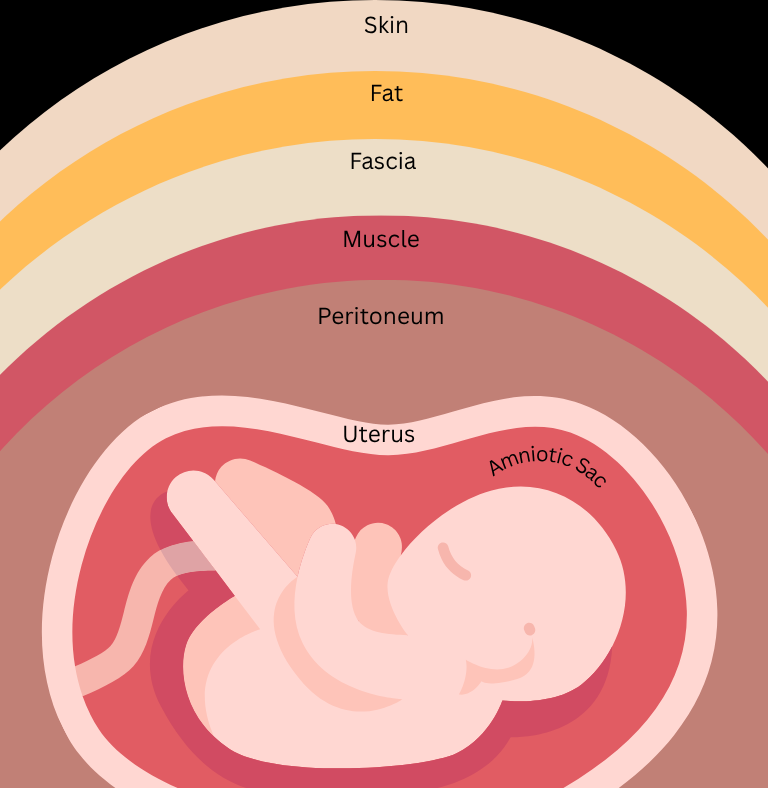
A Closer Look at C-section Anatomy
During the procedure, the surgical team will cut/move through seven layers of tissue before reaching baby.
There’s a common misconception that cesarean birth doesn’t affect the pelvic floor.
The truth is that the abdominal and pelvic floor muscles work together closely- what affects one will inevitably affect the other.
After a C-section, your body is recalibrating from a major abdominal surgery. It’s thus not uncommon to see pelvic mobility, function, and comfort impacted.
How Pelvic Floor PT Can Help
We specialize in the functional intersection of the musculoskeletal and reproductive systems.
Pelvic floor PT is a proactive approach not only in your healing process but also in setting you up for success in future pregnancies, deliveries, and long-term function.
What we help with:
· Mobilization of your C-section scar. This addresses any pain or discomfort and prevents new adhesions.
· Addressing urinary incontinence, frequency, and urgency.
· Rebuilding core + abdominal strength following birth.
· Addressing pelvic pain during sex, exercise, or daily activities.
· Treating diastasis recti (separation of abdominal muscles).
When To Start Pelvic Floor PT After Your C-section
Patients ask us this question daily.
In most cases, patients begin around 4–6 weeks postpartum, once cleared by their OB-GYN or medical provider.
That said, support doesn’t have to start after delivery. Many women benefit from establishing care during pregnancy.
What Your Pelvic Floor Therapist Wants You to Remember
There is no “right” or “wrong” way to bring a baby into the world.
C-sections aren’t always acknowledged adequately, compared to vaginal births. The experience can feel minimized or glossed over, even unintentionally. Pregnancy and delivery are not passive experiences. A C-section is a significant, complex surgery that deserves proper postpartum care.
If something feels off, or hasn’t improved the way you expected, it’s worth paying attention to. We’re here and we want to help.